Smart homes have existed for years, but most of them still feel surprisingly “dumb.” You press buttons, memorize commands, create complicated routines, and hope your devices respond correctly. Even today, many smart homes behave more like programmable gadgets than intelligent assistants.
That could finally change with Google Gemini AI.
Google is gradually replacing traditional Google Assistant features with Gemini-powered experiences across smart displays, cameras, speakers, and the Google Home app. Instead of relying on rigid commands, Gemini introduces conversational AI, visual understanding, and context-aware automation.
The biggest shift is not just better voice control — it’s the possibility that homes may become proactive instead of reactive.
Here are five ways Gemini AI could completely reshape smart homes over the next few years.
1. Smart Homes Could Finally Understand Human Language Naturally
One of the biggest frustrations with current smart homes is how robotic they feel.
Most systems still require precise wording like:
- “Turn on bedroom lights.”
- “Set thermostat to 24 degrees.”
- “Start movie mode.”
If you say something slightly different, devices often fail.
Gemini changes this by focusing on natural conversations rather than command-based interactions. Instead of memorizing phrases, users can speak casually.
For example:
- “I’m going to sleep.”
- “Make the living room cozy.”
- “Turn everything off except the hallway light.”
- “Keep the baby room cooler tonight.”
This sounds simple, but it could remove one of the largest barriers preventing mainstream users from fully adopting smart homes.
In my opinion, this is where AI becomes genuinely useful. Most people don’t want to learn automation systems. They simply want their homes to understand intent.
If Gemini succeeds at contextual understanding, smart homes may become accessible to older users, non-technical families, and people who previously avoided complicated setups.
That could expand the smart home market far beyond tech enthusiasts.
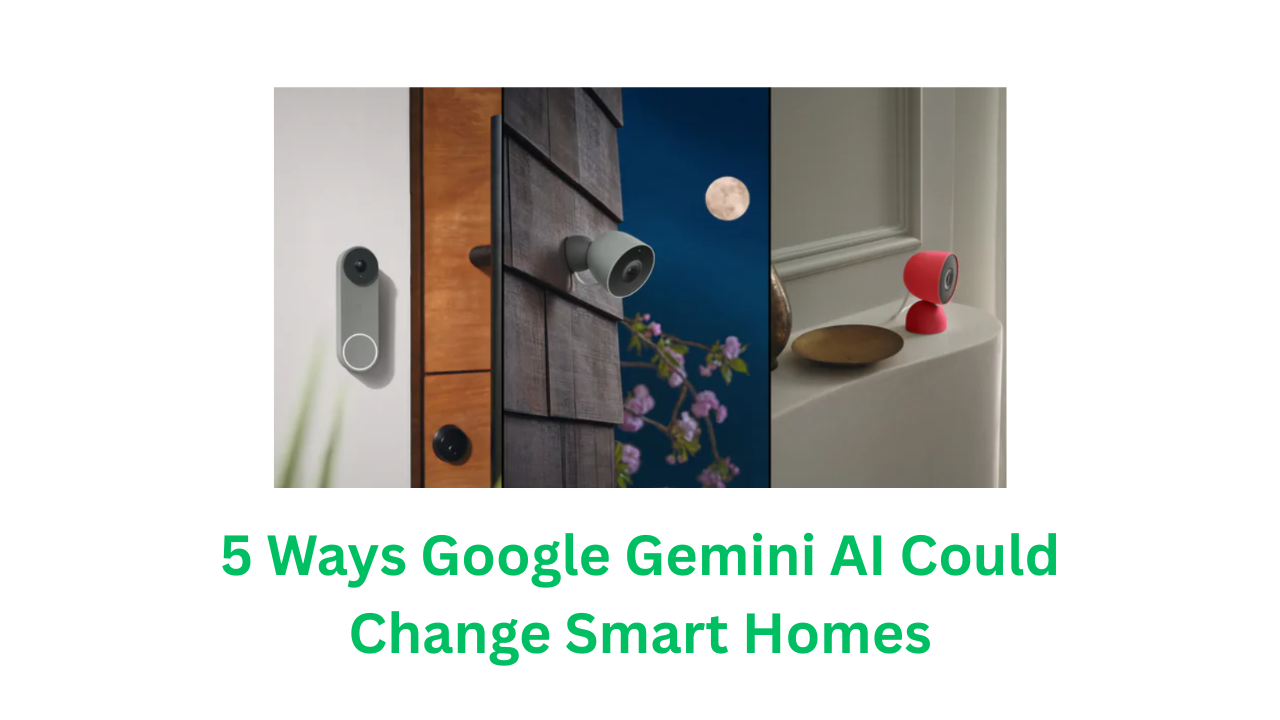
2. AI Cameras Could Become the Brain of the Entire House
Google’s newest Gemini updates focus heavily on camera intelligence. Instead of merely detecting motion, cameras can identify specific events like package deliveries, glass breaking, or unusual activity.
But the more important change is automation.
Gemini-powered cameras could eventually trigger entire home actions based on what they actually see.
Imagine these scenarios:
- Your porch camera notices a delivery driver and unlocks a smart package box.
- The driveway camera sees your car arriving and automatically opens the garage, turns on lights, and adjusts room temperature.
- A camera detects smoke in the kitchen and shuts down connected appliances.
- The system notices someone approaching at night and activates outdoor lighting before they reach the door.
Traditional automations rely on timers or simple sensors. Gemini introduces visual intelligence.
That means smart homes could evolve from “if-this-then-that” systems into homes capable of understanding real-world situations.
However, this also raises major privacy concerns.
Many users may feel uncomfortable with AI constantly analyzing camera feeds. Smart home companies will need stronger transparency, local processing options, and clearer data controls if they want consumers to trust these features long term.
3. Home Automation Could Become Easier Than Ever
Right now, creating smart home routines is often frustrating.
You open an app, choose triggers, configure conditions, assign devices, test the automation, then troubleshoot when it breaks.
Gemini could dramatically simplify that process.
Google has already introduced AI-assisted automation tools where users can describe routines in plain English instead of manually building them.
For example:
- “Turn on outdoor lights when someone walks near the backyard after midnight.”
- “If the kids leave for school, turn off unused devices.”
- “When I start watching TV, dim the lights and silence notifications.”
Instead of programming automations, people may simply describe what they want.
This could become one of the most important AI features in smart homes because complexity has always limited adoption.
Most people buy smart bulbs or speakers but never create advanced routines because setup feels intimidating.
Gemini may remove that friction entirely.
Personally, I think this matters more than flashy AI conversations. Convenience wins. If users can automate their homes without technical knowledge, smart homes could finally become mainstream household tools rather than hobbyist gadgets.
4. Smart Homes Could Become Predictive Instead of Reactive
Today’s smart homes mostly wait for instructions.
Future Gemini-powered homes may start predicting needs before users ask.
This is where AI becomes both exciting and slightly unsettling.
Over time, Gemini could learn:
- Your sleep schedule
- Preferred room temperatures
- Lighting habits
- Music preferences
- Security patterns
- Daily routines
Eventually, the home might prepare itself automatically.
For example:
- Lights gradually dim before your normal bedtime.
- Coffee starts brewing when your morning alarm goes off.
- Air conditioning adjusts based on weather forecasts and your habits.
- Security systems become more sensitive when you’re away for extended periods.
This predictive behavior could make smart homes feel less like technology and more like assistants quietly working in the background.
But there’s a fine line between helpful and intrusive.
The challenge for Google will be balancing automation with user control. Nobody wants a house making aggressive assumptions or constantly overriding personal preferences.
If Gemini becomes too automated, users may actually trust it less.
The smartest smart homes will likely be the ones that feel invisible rather than overly active.
5. Smart Homes May Become Subscription-Driven AI Ecosystems
There’s another side to this AI revolution that many consumers are ignoring: cost.
Advanced Gemini smart home features are increasingly tied to premium subscriptions, cloud AI processing, and paid services.
This could completely change the economics of smart homes.
In the past, users bought devices once and used them for years. But AI-powered systems may require:
- Monthly subscriptions
- Cloud processing fees
- Premium automation tools
- Extended video analysis
- AI summaries and smart alerts
That creates a new business model where smart homes become ongoing AI platforms rather than one-time hardware purchases.
Some users may accept this if the experience truly feels transformative.
Others may push back hard.
Online discussions already show concerns about feature limitations, reliability issues, and fear that older smart home functions may disappear behind paywalls.
In my opinion, this will become the biggest battle in the future smart home industry.
Consumers want smarter homes, but they also want ownership and reliability.
If AI subscriptions become expensive while performance remains inconsistent, many users may shift toward local, offline smart home systems instead of cloud-based ecosystems.
Final Thoughts
Google Gemini could represent the biggest smart home shift since voice assistants first appeared.
The real innovation is not simply “AI inside devices.” It’s the possibility of homes that understand context, visuals, habits, and human language in ways older assistants never could.
If Google gets this right, smart homes may finally feel truly intelligent instead of scripted.
But success depends on three critical factors:
- Reliability
- Privacy
- Affordability
Without those, even the smartest AI features may struggle to gain long-term trust.
Right now, Gemini for Home feels less like a finished product and more like the early foundation of something much larger.
The next few years will determine whether AI-powered homes become essential everyday tools — or just another overhyped tech experiment.